This timely piece explores the cognitive and cultural consequences of our growing reliance on screens and AI, particularly among younger generations. It highlights the tension between efficiency and depth, warning that without intentional use, technology may erode attention spans, critical thinking, and even personal identity—while also acknowledging that, when used wisely, digital tools can sharpen minds rather than dull them.- Editor’s Note:

In today’s digital world, screens dominate every aspect of life—education, entertainment, and communication. For Gen Z and Gen Alpha, tech is not just a tool but a lifestyle. But while technology promises boundless knowledge, critics ask: Are we getting smarter, or just better at Googling? Studies suggest that rising tech dependence may come with a hidden cognitive cost.
Shrinking Attention Spans in a Tapped-Out Generation
One of the earliest signs of trouble? Our ability to focus.
A 2024 Australian meta-analysis of 34 studies linked excessive screen use to weaker attention and executive function—particularly impulse control—and this pattern held across all age groups (The Conversation).
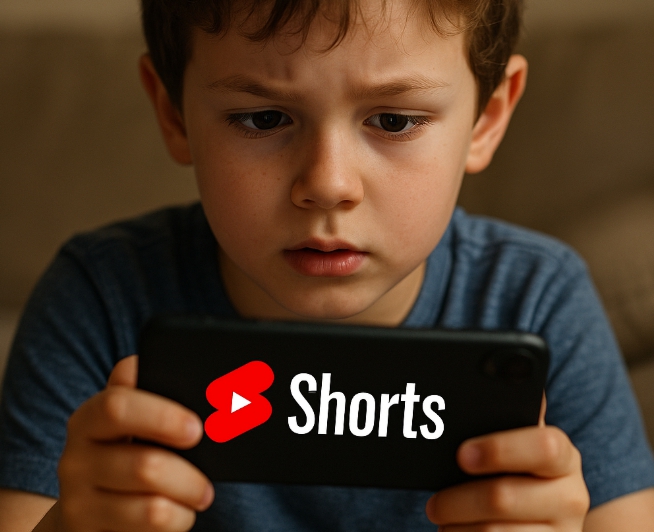
Other research pinpoints short-form video’s role in fragmenting attention: users accustomed to 9–15-second clips (TikTok, Reels) struggle with sustained focus on complex tasks (The Realist Juggernaut).
One notable classroom study showed students who kept their phones stashed retained 62% more information than peers who didn’t (Mindful Wholeness).
We aren’t just distracted—we’re being trained to prefer distraction.
Is AI Doing the Thinking for Us?
Beyond TikTok and texting, AI tools like ChatGPT and Grammarly are now doing much of the heavy lifting—especially in academics.
An MIT Media Lab study published in mid-2025 compared three groups writing essays: one using only their brain, one using Google, and the last relying on ChatGPT. The ChatGPT group showed the lowest brain activity, reduced memory retention, and a growing tendency to copy instead of think (TIME).
Educators called it a “demolition” of critical thinking, warning that students are trading depth for efficiency (New York Post).
Still, the problem isn’t the tech—it’s how we use it. Another MIT-affiliated study found that students who actively engaged with AI—questioning it, challenging it—actually improved their performance by 23%. The difference? Intention.
Cultural Flattening: Losing Our Voice to the Algorithm
AI tools may also be chipping away at personal voice and cultural diversity.
A joint study from MIT, Cornell, and Santa Clara University found that ChatGPT-generated text tends to echo mainstream Western phrasing, creating a “homogenized” style of writing and thought (The New Yorker).
This doesn’t just affect language—it affects identity. If teens begin to write, think, and argue in prepackaged AI rhythms, how long before we lose the ability—or even the desire—to sound like ourselves?
The Other Side: It’s Not All Doom
To be fair, complaints about attention spans and “lazy youth” aren’t new. Plato worried that writing itself would kill memory. Similar panic followed the invention of radio, TV, and video games (The Guardian).
What matters is how we use the tech—not whether we use it.
For instance, a 2023 meta-analysis of 225 studies across math, science, and engineering found that active learning using digital tools lowered failure rates and boosted performance significantly. Similarly, a European Research Studies Journal report in 2024 found 64% of students felt AI helped them better analyze complex topics when guided properly (LinkedIn – Hazem Nuseir).
Italian students in another study used ChatGPT to test opposing arguments—deepening their critical thinking rather than replacing it.
So… Smarter or Not?
The truth is, we’re not necessarily dumber. But we may be getting mentally lazier.
A recent arXiv study showed that AI users who were prompted to pause, reflect, and ask questions before accepting answers showed significantly higher critical thinking than those who accepted suggestions blindly (arXiv.org).
In response, the EU Education Council now plans to introduce AI literacy classes by 2026, hoping to build discernment before dependence (OpenTools.ai).
Use Tech, Don’t Let It Use You
We are not doomed to become less intelligent—but we are at risk of becoming less engaged.
In an age of instant answers and algorithmic thinking, students, parents, and educators need to choose intentionality. That means promoting tech-free spaces, teaching critical thinking alongside AI tools, and making space for slow, deep thought.
If we don’t take back control, we won’t be thinking less—we’ll just be thinking less for ourselves.
<Student Report Allyson Park> LACHSA addising16@gmail.com