 Editor’s Note: In this heartfelt reflection, a Korean-American youth shares their experience attending a March 1st Korean Independence Movement commemoration event.
Remembering the Spirit of March 1st
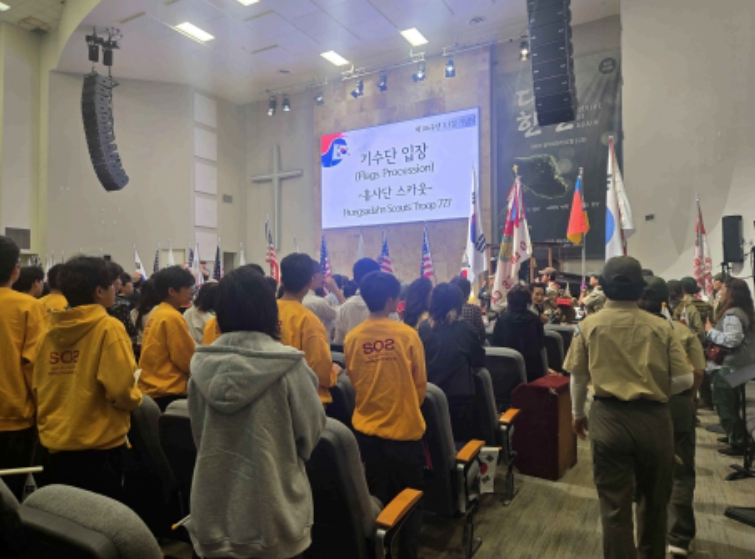
The Hwarang Youth Foundation, a non-profit organization that I am a part of, was invited to an event on March 1st, 2025, to spread the knowledge of young teenagers by providing a performance depicting the history of Korea’s March 1st Independence Movement. This was the era when many activists, including the entire Korean nation, fought against Japanese colonization, standing for their independence and freedom.
Koreans were all in it together as a whole. They utilized their national flag as a symbol of resistance, protesting day and night. The battle was not fought in vain, as there were countless sacrifices with lives lost, and many families endured the suffering of the loss of their loved ones.
To this day, March 1st is a very significant day—a reminder of honoring those who fought for Korea’s independence and a symbol of the national pride that all Koreans cherish.
During the event, I was stunned by the deep historical context in which March 1st is wrapped. The leaders of the patriotic movement were undaunted as they held high the country’s flag. As they protested, the words “Long live the Republic of Korea, Daehan Minguk Mansae!” echoed, as people stood for themselves against Japan’s rule.
These words continue to resonate with every Korean today because they contain the optimism and determination that fueled the independence movement.
When I had the chance to attend the March 1st Korean Independence Movement Day ceremony recently, I saw it as an opportunity for me to learn more about the significance of Korea’s past and appreciate the events that have brought us to this point.
These days, especially among the younger generation, many people forget the hardships Korea has gone through. The focus is often on the successes of modern-day Korea—such as K-pop, K-dramas, K-food, and overall Korea’s economic boom and technological progress—which occasionally eclipse the bitter history that allowed Korea to become what it is today.
Rediscovering the Roots of Korean Identity
It is forgotten that Korea’s roots lie in the rich tradition contained within the Joseon Dynasty, which in fact has shaped Korea’s existence for centuries, and in the suffering that Koreans endured under Japanese rule.
Today, Korea is largely considered one of the most advanced and progressive nations, known for its thriving economy, high-tech industry, and global influence. However, Korea was never known this way until now. Previously, Korea was unknown to the rest of the world, constantly fighting for its independence and survival.
Numerous times, Korea struggled to maintain its freedom, but because of a lack of authority and resources, surrendering was the only option many times, as they were taken advantage of by Japan.
What moved me the most at the event was how deeply emotional people connected with this history. March 1st is not just a day to recall past fighting, but also a testament to the strength and resilience of the Korean people.
Knowing this made the event that much more significant, leaving me in awe and giving me a profound sense of pride. The atmosphere of the event sent shivers down my spine as I contemplated how far Korea has come and the sacrifices of the generations past before my eyes.
The event began with a performance by elementary school children. Each of the dancers held a tiny Korean flag in one hand and an American flag in the other. As these kids were waving their flags, it unlocked the memory of when I was younger and performed on stage, always thrilled and brimming with national pride.
These little kids, representing both countries, gave me a bittersweet moment, leaving me with a heartwarming smile as it made me realize that being Korean is a part of our identity. To them, this flag waving was not just patriotism, but giving respect to the heritage they inherit.
Keeping the Memory Alive for Future Generations
Following along, there was another impactful performance given by a group of teenagers and some full-grown women. The expressions on their faces were so heartfelt that I encountered a physical reaction to how much the performance touched me.
Every action was hit dramatically and evocatively, intensified by the use of a black mesh prop. It was an immersive performance that conveyed the pain, optimism, and hope that accompanied the fight for Korean independence.
The vocalists were passionate, their voices strong and convincing as they sang—each note conveying a message of resilience. The dancers, with their clenched fists, every step intentionally fierce, maintained consistent energy throughout the show.
Watching them, I felt a rush of tremendous gratitude. Both the young and elderly performers alike had invested so much time practicing to bring this tribute. Their wholeheartedness was present in every gesture and note.
This was a reminder that the March 1st Independence Movement is not just a day to glance toward the past, but a way to honor the ongoing struggle for justice and freedom.
The performance’s poignancy reminded me that the March 1st Independence Movement is not one of the histories taught in most schools. In most places, the efforts and sacrifices of those times are unknown, making it easy for today’s generation to overlook their importance.
Events like these play a vital role in keeping the memory alive. They allow us to understand that Korean identity is not simply pride in the accomplishments of our country, but also the knowledge we carry of the sacrifices our ancestors made for the freedom we enjoy today.
This was significant to me as someone who identifies as Korean-American and was invited to this event. So many people these days claim to be Korean and talk of “the superior Asian race,” yet they are clueless about their heritage and origins.
True Korean identity is pride, but it is something more—it is discovering the history that shaped us, the struggles we endured, and the resilience that continues to define our people.
It was an emotional experience to witness and be a part of this cause that helped create many connections we all share with the past, regardless of where we are situated in the world or how disconnected we feel from the struggles of previous generations.
Finally, the event made an important point: we as a community must preserve this history and pass it down from generation to generation.
Korea’s struggle for freedom should never be forgotten—not only because it reminds us of who we are as Koreans, but also because it holds important lessons for all of humanity.
The hope we carry, both as individuals and as nations, is to never forget our origins. This lesson is not just for Koreans, but for people everywhere—because understanding our history is essential to understanding our identity and shaping a better future.
<Yena Lily Lee Student Reporter>OrangeCountySchool of TheArts yenalee530@gmail.com